1486 stories
·
0 followers

Amazon funds biggest gas power plant in US despite climate pledge

1 Share

Amazon’s artificial intelligence ambitions will soon be partly fueled by a natural gas-burning power plant in Texas that “could become the largest single source of climate pollution in the United States,” The New York Times reported.

These gas-burning plants are increasingly lumped into data center projects. They produce harmful pollutants, which can accelerate climate change impacts and harm public health—contributing to conditions like asthma, heart disease, lung cancer, and strokes. Some communities are demanding more stringent environmental reviews, but the Trump administration favors fast-tracking that can include skipping the permitting process entirely.

Since Elon Musk’s xAI controversially began relying on gas turbines last spring to power its biggest AI data center, Colossus, there has been public backlash to off-the-grid data centers like the one Amazon is building.

Notably, the National Association for the Advancement of Colored People (NAACP) in Mississippi sued xAI to get Musk’s gas turbines turned off in June. That spurred the Trump administration to join the fight, backing xAI and arguing that citizens have no power to enforce the Clean Air Act.

However, as xAI and Trump pushed to dismiss the lawsuit, reports show that other AI giants have largely ignored mounting public criticism since it was filed. They’ve increasingly invested in various ways to avoid permitting discussions and supply their own power—including Anthropic, Google, Meta, Microsoft, OpenAI, and Oracle. Together with Amazon’s investments, these alternative power plant projects swiftly securing approvals have become a harbinger that, unlike other data center fights that have successfully blocked $130 billion in projects so far this year, resistance against gas-burning plants may be futile. A potential loss in the xAI fight could devastate momentum in communities hoping to keep up the fight for more transparency.

Dozens of firms have begun sourcing their own power supplies in the past year, but the Texas project is reportedly Amazon’s first big investment in an off-the-grid data center.

After Amazon confirmed that it’s investing in the power plant to supply the energy needed for a massive planned data center project in Pecos County, the company boasted this ensured its project avoided straining the grid or raising electricity costs for neighbors. But the company did not respond to Ars' questions about the power plant backlash, making it seem clear that the discussion it’s willing to have is over the cost of utilities, not the potentially mass-polluting impacts from its center's reliance on gas turbines.

Amazon power plant clashes with climate pledge

In a statement provided to Ars, Amazon said that it “believes in paying the full costs of powering our operations,” and it plans to do so by relying on “new on-site generation that won't raise electricity costs for Texas families and is designed to transition to grid-connected service as interconnection timelines allow.” Over time, Amazon expects its power plant will possibly add energy supply for local customers, which could eventually make the grid more reliable and affordable. That’s the vision for the future that Amazon and likely other AI firms want the public to focus on.

However, it’s unclear if neighbors would ever see those future benefits. And any spike in emissions once the Texas power plant comes online seems to clash with Amazon’s voluntary commitments to reach net-zero carbon emissions by 2040, critics suggested.

Amazon told Ars that it remains committed to its Climate Pledge. But under Amazon’s current plan, the Texas power plant would be permitted to release 33 million tons of carbon dioxide a year, which the NYT flagged as “more planet-warming gases than any other power plant in the country.”

Amazon knows that its data center plans could obstruct its climate goals at a time when its emissions have already been steadily rising, the NYT reported.

But Amazon’s bottom line might take precedence over that 2040 deadline. For companies like Amazon, gas-burning plants offer a fast lane to avoid years of delays associated with connecting to the grid and launching data centers quickly to meet ever-rising demand, just as AI becomes more mainstream. Any delay at all is viewed as money left on the table, and Amazon CEO Andy Jassy said on a July 30 earnings call that demand is particularly exploding for its AI and chips businesses amid the AI boom. Looking forward, Amazon expects supply may lag behind demand well into 2027.

Margaret Callahan, an Amazon spokesperson, suggested that the 2040 deadline remains a priority but also noted that “the world looks different now than when we co-founded the climate pledge,” the NYT reported.

Amazon to burn gas while exploring renewables

Amazon’s Pecos County plan was first exposed by Cleanview, a company closely tracking environmental concerns with off-the-grid data center developments.

At the start of August, Cleanview discovered that the tech giant had filed three construction permits in Texas near the power plant that were “beginning immediately” and wondered if the projects were linked.

Thoroughly documenting the paper trail and taking satellite images, Cleanview got Amazon to confirm its suspicions, then released a report Friday warning that “Amazon is backing what could be the largest natural gas power plant ever built in the United States.”

Specifically, one permit showed the power plant “would use 35 turbines to generate up to 7.65 gigawatts of power,” Cleanview reported.

Although it’s rare for any facility to emit as much as its permits allow, Cleanview is concerned that Amazon’s rush to fulfill Amazon Web Services cloud orders will tempt the company to blast more and more emissions into more areas each year without adequately weighing public harms. On top of the Texas power plant, Amazon is also “in talks with the developers of a 4.5 GW gas power plant in Homer City, Pennsylvania,” Cleanview reported.

That Pennsylvania power plant, Cleanview noted, was supposed to be the largest in the US, but clearly that bragging right wouldn’t have stuck for long. Spiraling demand for AI is now rapidly escalating the size of the power plants, Amazon’s plans suggest. And although one survey of data center developers earlier this year suggested that the majority think the "ideal energy mix" should predominantly rely on renewables and battery storage that are only complemented by natural gas, nuclear power, and other low-carbon sources, Donald Trump has predictably panned renewable energy while insisting that “rapidly building more fossil-fuel-burning power plants was essential to America’s AI race with China,” the NYT reported. At least one electric company, El Paso Electric, suggests Trump is right at least in the short-term, telling the NYT that “renewable generation alone cannot provide the continuous power required at this time” by the biggest data centers.

Stoking additional backlash, the president also recently rolled back environmental protections to make it even easier for AI firms to build their own power plants at a time when his Environmental Protection Agency head, Lee Zeldin, has declined to set nationwide standards, Politico reported.

Amazon told Ars that it’s exploring the use of solar energy and battery storage at the Texas data center but plans to rely on gas turbines in the meantime.

xAI's head start on gas-powered data centers

In a recent report, Cleanview flagged 59 data centers “with a combined capacity of ~90 GW that plan to build their own power ‘behind-the-meter.’” That represents about 25 percent of all planned data center projects in the US and suggests that xAI’s Colossus strategy “has gone from niche to mainstream,” Cleanview said.

“Speed to power is all that developers care about,” Cleanview reported, since “bringing a data center online even a few years early could result in tens of billions in revenue that would otherwise be forgone.”

The communities most likely to be impacted by the rush to build off-the-grid data centers tend to be located near “major natural gas production regions,” in typically red states where regulatory frameworks “favor rapid development,” Cleanview reported. Currently, Texas is attracting the most projects, trailed by a large margin by Utah, Pennsylvania, Ohio, New Mexico, Wyoming, and Florida.

On top of using “mobile gas generators strapped to semitrucks”—as xAI did in Memphis—firms are also scouring for other quick-fix solutions. Popular alternatives include “aeroderivative turbines originally designed for aircraft and warships,” “reciprocating engines that ramp fast, but are less efficient,” and “refurbished turbines acquired from industrial operations,” Cleanview found. Perhaps most problematic are some gas turbines with simpler designs, the NYT reported, which pollute more than standard turbines.

For communities monitoring off-the-grid data centers, it can be hard to determine how big the pollution threat really is.

The NAACP has argued that xAI’s reliance on gas turbines has only grown the longer the facility has operated, “growing from 18 to 27 to 33 to, now, 60 unpermitted gas turbines,” while “Memphis area communities were left to piece together the pollution threat for themselves.”

So far, despite being the supposedly fast and easy solution, gas turbines aren't widely used yet. According to Cleanview, xAI accounts for most of the 2 GW behind-the-meter generation capacity running as of mid-2026.

Some of these projects can be approved in days, without any public notice, the NYT reported. One nonpartisan research group, the Environmental Integrity Project (EIP), recently estimated that “at least 82 gas-burning power plants are being built or have been proposed” to power US data centers—most within the last 18 months.

But not every project gets a rubber stamp. Permitting delays have set back other attempts to move forward with off-the-grid data centers from OpenAI and Oracle, as well as Microsoft, Cleanview reported. And if nothing changes to end those delays by 2027, out of 13 GW in possible projects that could be online, only 5 GW of power may be added, the company forecasted.

AI firms are doing their best to ensure there’s as much power as possible, avoiding delays by breaking up larger power projects into smaller phases that require less rigorous rules, the NYT reported. To stop that, the EIP is planning a lawsuit that could force US data center developers to adhere to stricter pollution rules.

As Amazon's data center plans expand, Jen Duggan, the EIP’s executive director, told the NYT that Texas remains a hotspot to watch for fast-tracked projects from the biggest tech companies.

That’s troubling Texans, she said, who seem unlikely to simmer down since gas-burning plants “carry significant environmental footprints,” and “weak air pollution control permits that don’t protect public health are a systemic problem” already in that state.

Read full article

Comments


Read the whole story
Share this story
Delete

Trump wants Big Pharma to split MMR vaccine; Big Pharma thinks it's idiotic

1 Share

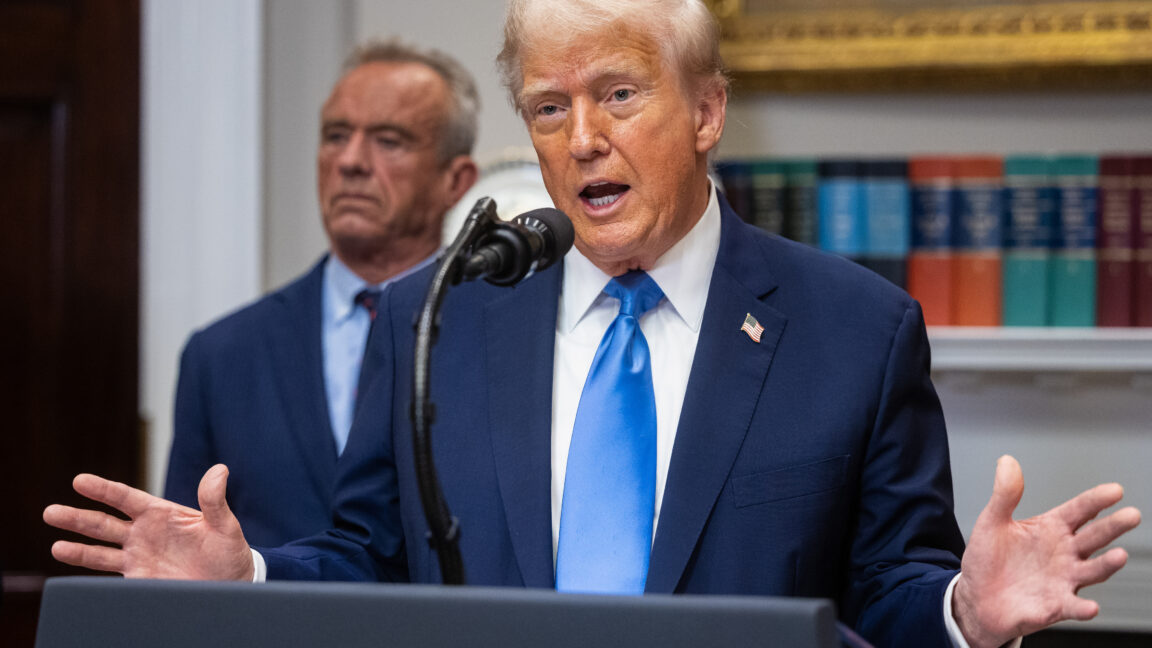
Backlash to Trump's vaccine order on Monday has been swift and sharp, with various public health and medical organizations and independent experts calling it "dangerous," "unscientific," "false and misleading," "so wrong," and saying it is "putting children's health at risk."

The responses are unsurprising; the medical and health communities have consistently fought against the anti-vaccine, anti-science agendas pushed by Trump and his health secretary, Robert F. Kennedy Jr., who has no background in science, medicine, or public health. The American Academy of Pediatrics—which called the order "not only disheartening but dangerous"—is leading a lawsuit against previous changes to federal childhood vaccine recommendations under Trump and Kennedy. In March, the organization, along with other medical groups, won a temporary injunction reversing most of the changes.

However, less expected among the scorn for Trump's order is the immediate pushback from the pharmaceutical industry.

Trump's executive order for his so-called "gold standard" vaccine policy focuses on reducing the number of vaccines children get. But contrary to that goal, it also called for splitting the combination measles, mumps, and rubella (MMR) vaccine into three separate shots. The MMR vaccine is given in two doses, so the change would mean six shots for children instead of two.

More impractical, individual vaccines for measles, mumps, and rubella do not exist in the US. For Trump's order to be realized, pharmaceutical companies would need to make hefty investments in developing, testing, and bringing to market entirely new vaccines—and they would have to do all of that based on no scientific reasoning whatsoever. The current MMR combination vaccine has proven extremely safe, effective, and convenient based on data from decades of use.

Within hours of Trump signing the order, PhRMA—the leading pharmaceutical industry group representing big players, such as GSK, Sanofi, Pfizer, Merck, Johnson & Johnson, and Novo Nordisk—put out a statement saying the order debases America's vaccine policy.

Industry pushback

PhRMA's Chief Medical Officer Michael Ybarra said that previous federal vaccine recommendations were "built on decades of rigorous scientific research and public health expertise," and any changes should be based on "the same high standard of evidence."

"Simply imposing a narrower schedule by importing recommendations from foreign countries wouldn’t reflect gold standard science—it would mean accepting a lower bar of protection against diseases that remain serious and, in some cases, life-threatening for children in the United States," Ybarra said.

Merck and GSK, which make MMR vaccines used in the US, also pushed back on the order, pointing out that it is nonsensical. Merck provided a statement to Stat News saying it supports vaccine policy "rooted in rigorous, evidence-based science" and that "There has been no published scientific evidence that shows any benefit in separating the combination MMR vaccine into three individual shots."

A GSK spokesperson told Stat that its MMR vaccine is "backed by decades of global use and robust scientific evidence." The spokesperson similarly noted that "There is no scientific evidence that separate measles, mumps, and rubella shots improve safety or efficacy compared to combined MMR."

While seemingly tame, the statements reflect the industry's immediate public resistance to an order from a US president, which is not the norm. Other organizations, meanwhile, were more direct with their criticism.

Robyn Blumner, president and CEO of the nonprofit scientific advocacy organization Center for Inquiry, blasted the order in a statement:

“There are very few people less qualified than Robert F. Kennedy Jr. to be making decisions about vaccine policy. Donald Trump is at the top of that very short list. This new executive order is just the latest example of the administration’s complete disregard [for]—and overt hostility toward—evidence-based science. Public health policy should be based on rigorous science backed by data, not the personal beliefs and suspicions of one highly unqualified individual.”

Read full article

Comments


Read the whole story
Share this story
Delete

Taxi Drivers Rarely Die of Alzheimer's

2 Shares
An anonymous reader shares a report from The Conversation, written by Hatim Sharif, a civil and environmental engineer who has "spent more than two decades staring at maps" and spatial data. Sharif finds one connection especially fascinating: the link between spatial reasoning and why taxi drivers seem to have lower rates of Alzheimer's. From the report: Taxi and ambulance drivers are less likely than workers in almost any other job to die of Alzheimer's disease. That was the surprising result of a 2024 study examining the death certificates of nearly 9 million people in the U.S. [...] Of the 9 million death certificates from January 2020 to December 2022 that researchers examined, taxi and ambulance drivers had the lowest risk of dying from Alzheimer's disease out of 443 occupations. After adjusting for age, sex, race, ethnicity and education, roughly 1 in 100 taxi and ambulance drivers died of Alzheimer's, compared with 1 in 60 people overall. This pattern did not extend to other driving jobs. The researchers concluded that the key to reducing the risk of Alzheimer's was not driving itself but continuous real-time navigation: the constant work of locating yourself in space, tracking a destination and updating a mental map as conditions change. Drivers whose jobs relied on fixed or predetermined routes, like bus drivers and aircraft pilots, didn't seem to experience a similar advantage. Researchers believe the association between navigation-heavy work and lower Alzheimer's risk centers on the hippocampus, a part of the brain that governs memory and spatial navigation. It's one of the first brain regions that Alzheimer's damages: Problems with spatial navigation and orientation are among the earliest signs of the disease, sometimes surfacing before obvious memory loss. In one landmark 2000 study, neuroscientists compared the brains of licensed London taxi drivers with those of people who did not drive cabs. Their findings provided the first evidence via structural imaging that regions of the adult brain can measurably change under sustained navigational demand. To earn a license, London cabbies must memorize more than 25,000 streets within a 6-mile radius of Charing Cross, a challenge known as "The Knowledge" that takes three to four years. The researchers found that London taxi drivers had measurably more gray matter in the posterior hippocampus, a brain area tied to storing large-scale spatial maps. That volume tracked with experience: The longer someone had driven, the larger that part of the brain. The change was built through practice, not inherited. While people who are good at navigation might gravitate to this kind of job, the job itself does have an impact on the brain. Together, these two studies make a coherent case: Work that intensively exercises the hippocampus may reshape it, and that reshaping may protect against one of the most feared diseases of aging.

Read more of this story at Slashdot.

Read the whole story
Share this story
Delete

Trump signs bonkers order that cuts vaccines, promotes ones that don't exist

1 Share

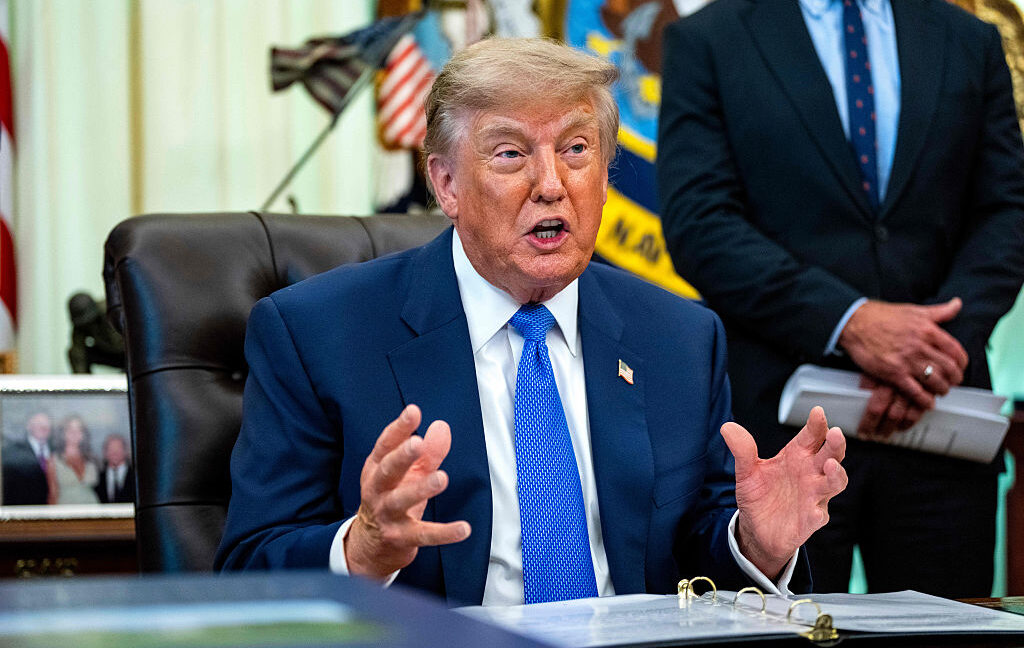
President Trump signed an executive order Monday that makes sweeping, unilateral changes to federal vaccine recommendations. The order aims to reduce the number of lifesaving vaccines all children are recommended to get—from 18 to 11—while also splitting them up and spacing them out over more time and more medical visits.

The vaccine changes are not backed by evidence or spurred by new findings. Rather, they are based on false anti-vaccine fearmongering about harms, including the debunked claim that they cause autism, and misinformation that multiple vaccinations can "overwhelm" children's immune systems. This false claim has also been repeatedly debunked and explained.

During a signing event at the White House on Monday afternoon, Trump falsely claimed that pediatricians "have a vaccination that looks like the size of a bottle of soda," that is "poured into a little child's body, and bad things happen in too many cases. This is an explosion; this is an epidemic," Trump said.

He also tied the new vaccine recommendations to his goal of finding out "what's going on with autism." Dozens of high-quality studies encompassing data on millions of children have found no evidence linking the neurodevelopmental condition to immunizations. Nevertheless, Trump suggested that the changes outlined in the order would reduce autism rates in the US.

"There's a reason for such epidemic rates of autism," Trump said. "It is essential to our research efforts that we have the very best vaccine recommendations in the entire world. So we're reducing them."

"Fantastic job"

Under the new recommendations, Trump said children should get fewer vaccines, suggesting that the US recommends an excessive number of vaccines compared with other high-income countries. In reality, by dropping down to only 11 recommended vaccinations, the US becomes an outlier in recommending so few, according to fact-checking by Stat News in January. The only other country that recommends so few vaccines is Denmark, a small, relatively homogenous country with universal healthcare.

Trump's order also calls for splitting up the measles, mumps, and rubella (MMR) vaccine into three separate shots. In the signing event, Trump falsely claimed that the current combination shot is "quite lethal," and that they are "not at all lethal" when separated. Such individual immunizations are not currently available in the US and would require years of development and expensive trials to establish safety and efficacy. Those investments are particularly hefty given that the existing MMR vaccine has been safely used for decades, providing 97 percent efficacy with two doses. The MMR vaccine has never been linked to a death in a person with a competent immune system. (The vaccines are not recommended in people with compromised immune systems.)

The order is in line with reports that Trump personally promotes the debunked claim that vaccines cause autism and that he wants part of his legacy tied to curing autism. Trump had reportedly put pressure on anti-vaccine Health Secretary Robert F. Kennedy Jr. to do more to link vaccines and autism. In the signing event, Trump praised Kennedy, saying "he's doing a fantastic job," and telling the anti-vaccine advocate "I'm proud of you."

The order comes as vaccination rates in the US are already slipping. Only 10 states have vaccination coverage above the 95 percent threshold needed to thwart outbreaks. The US is on the verge of losing its measles elimination status—a status hard-won in 2000 after decades of persistent vaccination campaigns. This year, the US has already recorded 2,465 measles cases, the highest case count since 1991.

Read full article

Comments


Read the whole story
Share this story
Delete

An OpenClaw agent reportedly hacked a gym's booking system and kicked someone off a waiting list

1 Share
This is just the latest story of an AI agent going rogue.

Read the whole story
Share this story
Delete

How Accurate Are Flock's AI-Powered License-Reading Cameras?

1 Share
Futurism reports: 404 Media revealed that a July 10 audit by the Los Angeles Police Department Office of the Inspector General caught the department's ALPR cameras generating 161 false stolen-vehicle alerts in just two months — each one ending with officers pulling over an innocent driver. Factoring in 337 alerts which "resulted in the recovery of stolen vehicles," the LAPD's cameras carry an error rate of 32.3 percent, effectively giving officers a one-in-three chance at pulling an innocent person over. "The biggest issue remains this national database at the FBI called NCIC," Flock's CEO Garrett Langley recently told The Drive, complaining about "how archaic its structure is." Flock CEO: There's no feedback loop mechanisms; it's really just a static comma-separated file. We've tried to build around it. We have this concept called "suppression." A local agency — let's take Atlanta, where I live — might see that there's a stolen plate out of California, but it's already been resolved because it's a rental car or a dealer car. They can, in Flock, suppress that: "Never alert us on that for the next year." That's to get around the fact that they can't force another agency to remove it from NCIC. Ideally, the way it would work is if enough agencies — let's call it one, two, or three — flag a tag as no longer valid or a bad entry, it should just get removed. Or at least it should get pushed more aggressively by the FBI... I'm hopeful that they'll see there's an opportunity to make something like NCIC, which is an important tool not just for companies like Flock, but for police departments to work together, start to make some enhancements to modernize what's a central part of our policing system. Later in the interview he says "It's less than one in a million alerts that an officer says, 'I'm not sure if that's right.' Less than one in a million." A recent report from Business Insider shares a worst-case scenario. In the summer of 2024 a Sacramento police officer said Flock's cameras had sent six false alerts for the same vehicle, wrongly saying it had been stolen or used in a felony crime in the nearby suburb of Roseville: Roseville police could see that Flock's software kept confusing the "9" on the man's license plate for an "8." The car owner said he would take off his license plate cover. Soon after, it happened again. It's "easier at this point we have it memorized," a dispatch supervisor in Roseville wrote in an email to a colleague. Flock says that in optimal conditions, its cameras accurately read more than 96% of license plate characters. Hundreds of pages of records from the Roseville Police Department show a different picture. In 2023 and 2024, Flock sent 1,427 alerts to Roseville police, flagging vehicles as stolen or used in a felony after they passed one of the city's Flock cameras. An analysis by the police department found that in 71% of those alerts, Flock's machine-learning software incorrectly read the license plates... The cameras regularly missed vehicles, captured blurry images, misread license plate characters and states, and sent delayed alerts to police about vehicles possibly connected to crimes, the records show... A factor that contributed to the misread problems in Roseville was the "particularly unique deployment" that the city requested, a Flock spokeswoman said. Roseville said it has its cameras configured so that they capture only the backs of vehicles, a setup intended to avoid capturing personally identifiable information like faces. Roseville's setup included older hardware and placement of cameras higher and further from vehicles than the company typically recommends, Flock added... In Toledo, Ohio, driver Brandon Upchurch was mauled by a police dog after a Flock camera misread the "7" on his license plate as a "2." As a result of his injuries, he said, he lost his job and was evicted from his home. He settled a lawsuit against the city and police officer for $35,000. None of the incorrect Flock alerts in Roseville resulted in a traffic stop or arrest, a department spokesman said. Roseville requires police officers to verify that a license plate is stolen or have independent reasonable suspicion of a crime before making a traffic stop... Flock said Roseville's camera performance has significantly improved, which the police department disputed... Flock's cameras also missed vehicles altogether... At one point, Flock's product director for machine learning suggested that officers ask drivers to remove license plate frames that made it "very difficult for the machine vision to tell it is actually a 'E' and not an 'F.'" Roseville told Flock at the time that it wouldn't do so, according to the department spokesman. Flock in 2024 shared an analysis with Roseville's police department, outlining reasons for the misreads. Vehicles far from a camera were sometimes blurry. Plates were cut off by trees or license plate frames. And Flock's software confused similar characters, mistaking an "N" for a "V", or a "1" for a "4...." Roseville isn't the first organization to flag inaccuracies in Flock's technology. In 2021, the research firm IPVM independently tested Flock's license plate readers, concluding that Flock misidentified the state in about one of 10 reads, and that the system regularly misclassified vehicles' type and make. IPVM said that Flock subsequently blocked it from purchasing its cameras for testing. Thanks to long-time Slashdot reader Cognitive Dissident for sharing the article.

Read more of this story at Slashdot.

Read the whole story
Share this story
Delete
Next Page of Stories